
TEACHING

Not just taught – made understood

My Teaching Sytle

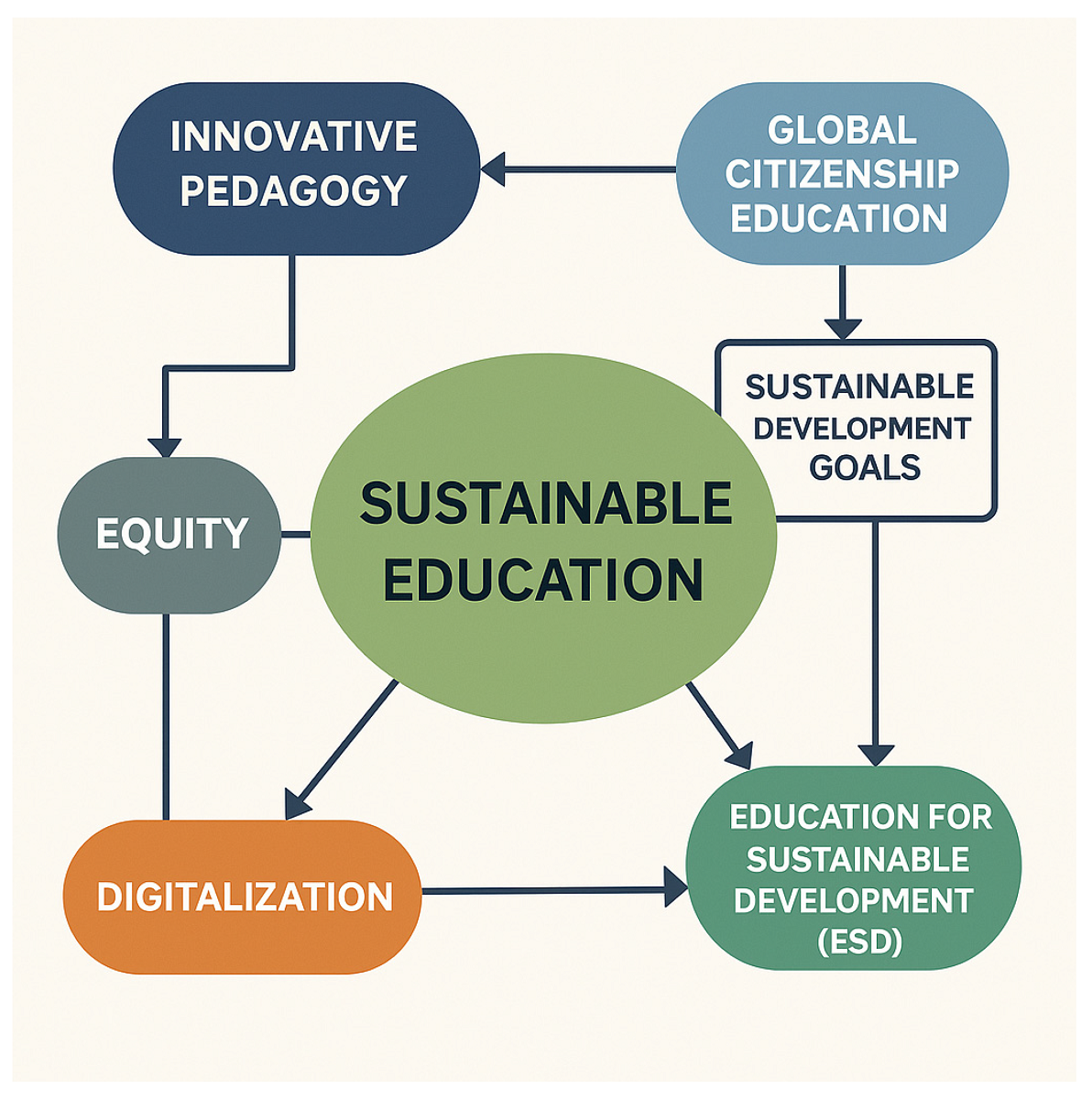
I seek to make sustainability understandable — across disciplines, backgrounds and levels of prior knowledge. My work is driven by the conviction that a deeper conceptual understanding of sustainability is essential to shaping and transforming our collective future.

Conceptual Depth and Multidimensional Learning

I translate complex systems into clear principles and actionable insights, enabling students and professionals to recognise sustainability as a form of strategic intelligence, one that fosters innovation, long-term thinking and responsible leadership.
Thus, I combine conceptual depth with scientific precision, and methodological diversity with an inspiring learning atmosphere. Structured didactics, narrative framing, experiential methods and embodied learning elements allow me to engage analytical reasoning, intuition and social awareness alike. Sustainability, to me, is a multidimensional learning process — one that activates cognition, perception and competency.

Competences

Sustainability made understood

I support degree programs, faculties, and academic departments that seek to integrate sustainability into their teaching in a way that is both rigorous and alive — with a focus on theoretical foundations, systemic perspectives, and the epistemic horizons of sustainability science.
At the Master level, students critically engage with sustainability theories (Ott & Döring; Jackson; Brand & Wissen) and methodological pluralism (Kates; Jahn). The aim is to generate “orientation knowledge” (Mittelstraß) that enables informed transformation.
In MBA and executive programs, the emphasis shifts to application: integrating sustainability science into leadership and strategic decision-making—through real-world labs (Schneidewind), Gestaltungskompetenz (de Haan), and the operationalization of Planetary Boundaries (Rockström).

Teaching Portfolio – Examples

Master Programs

Module

Contents/Concepts

Key Theories & Sources

Main Scholars

ECTS

Competences

Systems Thinking & Transformation

System Dynamics, Emergence, Self-organization, Transformation Research

Meadows (2008) Thinking in Systems, Luhmann (1984), Prigogine, WBGU (2011) Great Transformation

Meadows, Luhmann, Prigogine, Kauffman, Schneidewind

5–6

Complex thinking, scenario development, reflection

Sustainability & Digitalization

AI, Blockchain, Big Data, Digital Ethics

Floridi (2013) The Ethics of Information, Zuboff (2019) Surveillance Capitalism

Floridi, Zuboff, Brynjolfsson

4

Digital competencies, critical reflection, ethics

Culture, Values & Postgrowth

Postgrowth, Common Good Economy, Doughnut Economics

Paech (2012), Felber (2010), Raworth (2017)

Paech, Felber, Raworth

3–5

Value shift, alternative narratives, transformation

MBA Programs

Module

Contents/Concepts

Key Theories & Sources

Main Scholars

ECTS

Competences

Sustainable Leadership & Change Management

Leadership, Change, Learning Organization

Senge (1990) The Fifth Discipline, Kotter (1996) Leading Change, Bass (Transformational Leadership)

Senge, Kotter, Bass

3

Leadership skills, change strategies

Circular Economy & Innovation

Cradle to Cradle, Blue Economy, Doughnut Economics

Braungart & McDonough (2002), Pauli (2010), Raworth (2017)

Braungart, McDonough, Pauli, Raworth

3–4

Innovation, business models, best practices

Consciousness & Responsibility

Neurobiology, Consciousness, Ethics, Integral Theory

Hüther (2015), Damasio (1994, 2021), Seth (2021), Wilber (2000)

Hüther, Damasio, Seth, Wilber

2–3

Self-reflection, value orientation, leadership ethics

Turning sustainability into a coherent, learnable field

What Other Say

Examplary Course: “Evolutionary Sustainability Masterclass”

The Evolutionary Sustainability Masterclass is a signature program I designed to integrate systemic thinking, scientific foundations, and evolving consciousness into sustainability education.

Course Description

This 4-day immersive masterclass explores sustainability as an evolutionary system rather than a static goal. Drawing from Earth sciences, biology, psychology, sociology, and consciousness studies, participants learn to understand sustainability as a dynamic, emergent process that evolves through patterns of matter, life, mind, and culture.
Through a mix of scientific insight, creative reflection, and systems practice, the course provides an integrative framework to rethink sustainable development beyond compliance — towards intelligence, emergence, and transformation.

Designed for:

Teaching sustainability as an evolutionary, cultural and conscious challenge