
Building conceptual clarity for a world in transformation
Between Scientific Insight and Worldly Reality
Sustainability has become part of everyday language. It has rapidly differentiated into business models, policy instruments, and practical applications. For this reason, also sustainability theory must evolve not only to keep up with reality, but to create it. Without a solid conceptual foundation, its expanding diversity risks fragmentation.
Advancing the Foundations of Sustainability
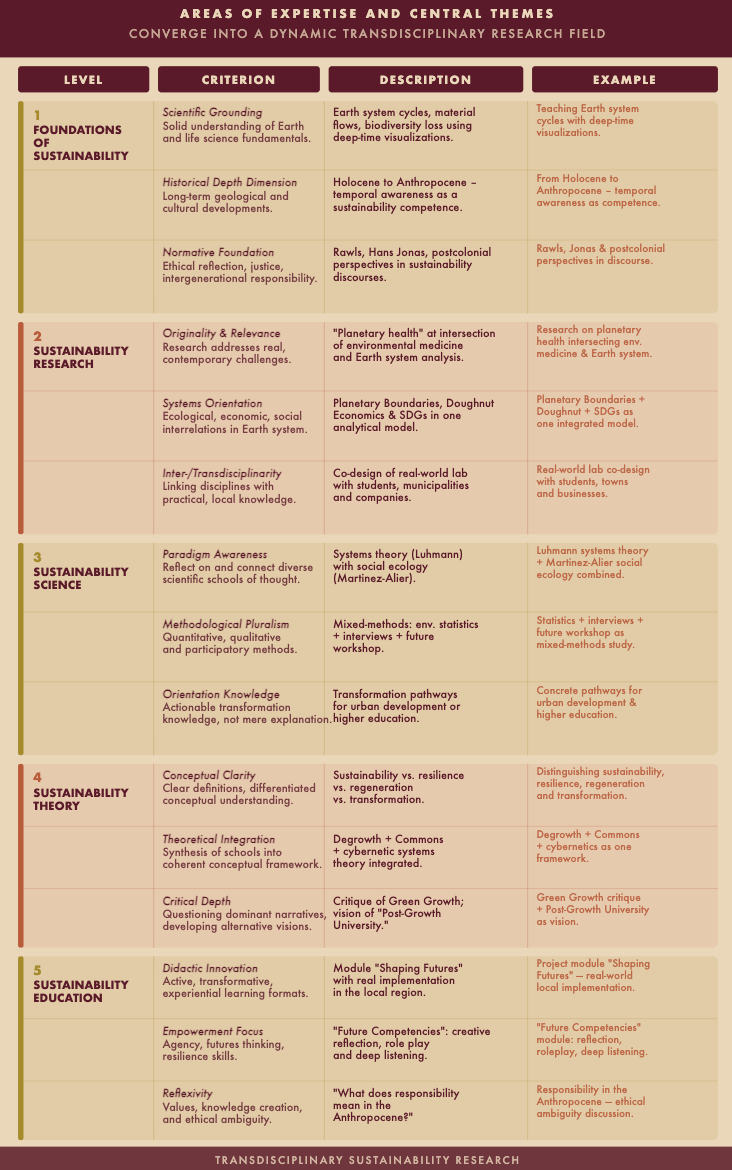
As a scholar I am committed to strengthening the theoretical foundations of sustainability. Without conceptual clarity, the diverse potentials of sustainability remain diffuse; with it, they become intelligible and shapeable.
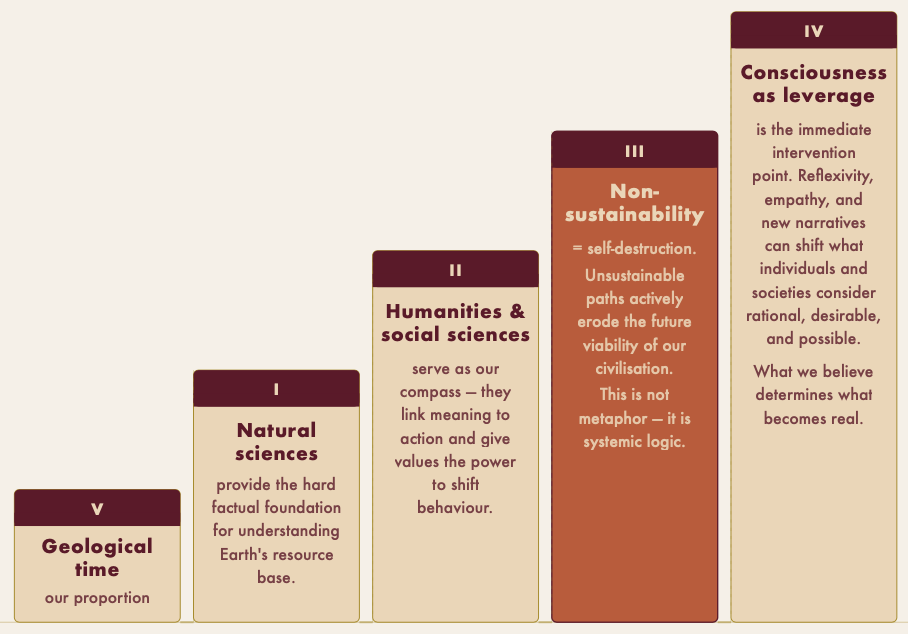
My Five Theses
First, the natural sciences provide the hard factual foundation for understanding Earth’s resource base.
Second, the humanities and social sciences serve as our compass, linking meaning to action.
Third, non-sustainability is self-destruction — it erodes the future viability of our civilization.
Fourth, consciousness is the immediate leverage point: reflexivity, empathy, and new narratives.
Fifth, the geological timeline reminds us of our proportion: we have existed for mere seconds on the planetary stage — and already risk tearing down the curtain.
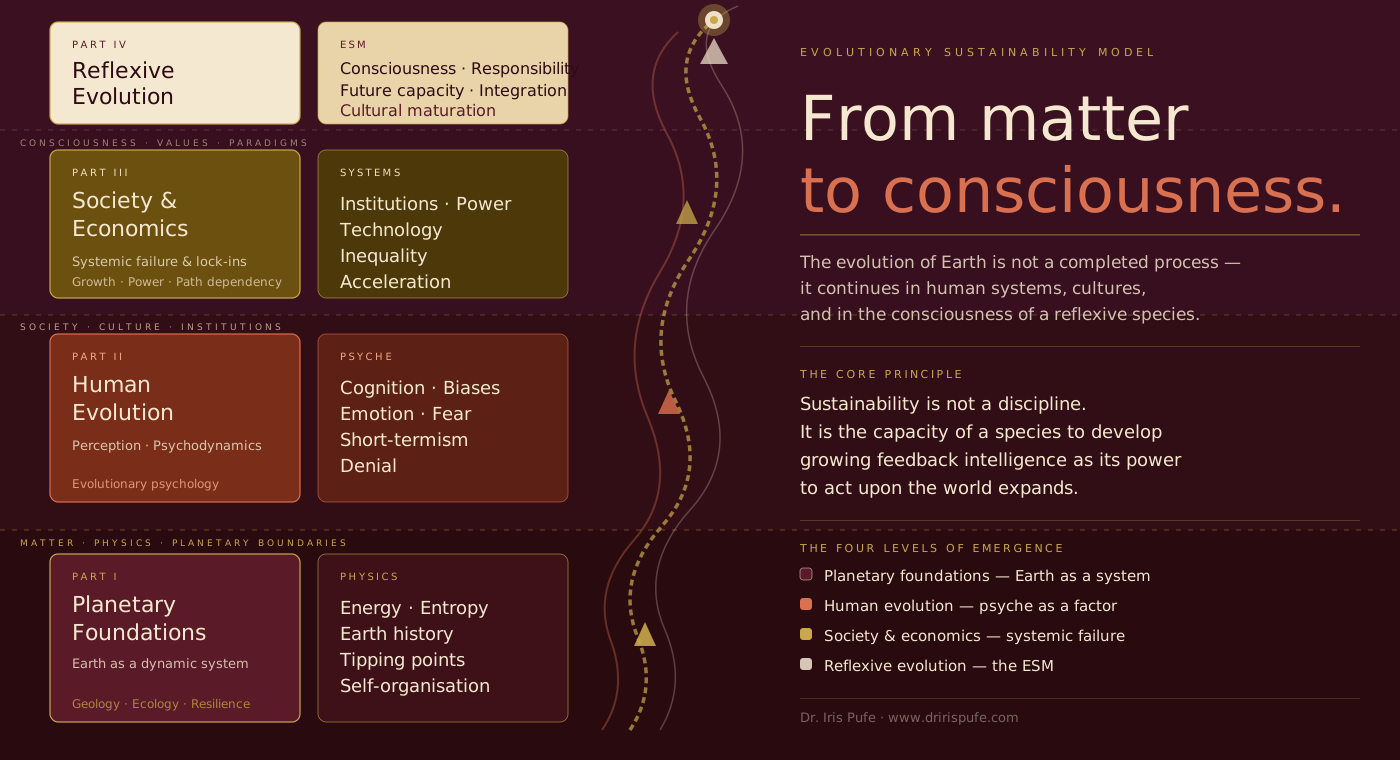
Sustainability is the capacity of a species to develop growing feedback intelligence in proportion to its growing power to act.
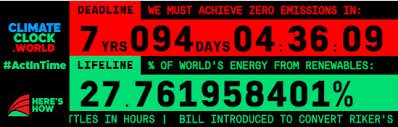
Systematic research turns urgency into advantage: Delay costs time and money, while focused knowledge creates lasting value
Advancing the Foundations of Sustainability
My Fields of Research and Teaching
Anthropocene, adaptive capacity, biodiversity, atmospheric chemistry, negotiation processes, autopoiesis, bioeconomy, biosphere, biogeochemical cycles, carrying capacity, circular economy, climate engineering, carbon budget, commons, corporate social responsibility, decarbonization, dematerialization, disruptive innovation, Earth system science, efficiency, emergence, emissions trading, energy efficiency, energy transition, decoupling, development policy, environmental governance, epistemology, renewable energy, externalities, feedback loops, land use, intergenerational justice, geoecology, theories of justice, global commons, globalization, governance, green economy, greenwashing, human capital, indicator systems, institutional economics, interdependence, interdisciplinarity, capital stock, climate adaptation, climate justice, climate modeling, climate neutrality, climate policy, complexity, critique of consumerism, circularity, cultural change, life cycle assessment, guiding principles, policy instruments, lifestyles, sustainability reporting, sustainability indicators, sustainability management, natural capital, net zero, unsustainability, normativity, ecological footprint, ecosystem services, ecological modernization, ecological resilience, ecological transformation, economics of scarcity, planetary boundaries, post-growth, prevention, resource productivity, resource regimes, rebound effect, regenerative systems, resilience, risk society, sufficiency, Sustainable Development Goals, systems thinking, systemic risks, systems transformation, technosphere, transformation research, transformation pathways, transdisciplinarity, greenhouse gases, environmental ethics, environmental economics, environmental policy, environmental sociology, vulnerability, growth critique, knowledge integration, long-term viability.
Research is the foundation — a solid base for meeting the challenges of the future
Key Concepts, Analytical Tools, Methods, and Solution Approaches in Sustainability
Adaptive governance, agenda-setting, backcasting, sustainability-integrated balanced scorecard, benchmarking, carbon accounting, carbon footprinting, cost–benefit analysis, decarbonization strategy, design thinking for sustainability, supply chain due diligence, environmental impact assessment, footprint analysis, governance analysis, impact assessment, innovation systems approach, life cycle assessment (LCA), material flow analysis, multi-level perspective on socio-technical transitions, standards-based sustainability reporting, participatory scenario analysis, planetary boundaries framework, policy instrument analysis, real-world laboratories (Reallabore), resilience assessment, risk analysis, stakeholder analysis, system mapping, system dynamics modeling, theory of change, transformation pathway analysis.
Clusters of Sustainability Thought
Meadows, Rockström, Steffen – Earth system science and planetary boundaries.
Ostrom, Polanyi, Sen – institutions, justice, and the governance of commons.
Latour, Luhmann, Beck – society as a complex system of observation and risk.
Daly, Raworth, Costanza – economics within ecological limits.
Schellnhuber, Crutzen, Carson – scientific warnings with profound political implications.